Buying Land With vs Without Grid Access: The Power Cost Reality
Affiliate disclosure: This page contains paid links to Amazon and eBay. If you buy through them, we may earn a commission at no extra cost to you. As an Amazon Associate I earn from qualifying purchases.
You're shopping for cabin land. Two parcels look similar on the map, but one has grid electric available at the property line and the other is truly off-grid — miles from the nearest power pole. The price difference is often substantial. Is the grid-access premium worth it? What does true off-grid actually cost when you add up solar, batteries, backup generators, and ongoing operating expenses? This is the money math most cabin buyers never do until after closing.
The Grid-Access Premium
Comparable land parcels with grid access vs without typically show meaningful price differences — sometimes tens of thousands of dollars for the "with power" version of the same acreage. In some rural markets the premium is smaller; in some it's essentially the cost of running the grid to the parcel from the nearest power pole.
That's the seller's calculus. Yours is different: what does it actually cost to bring power to that parcel yourself if the seller hasn't done it? Utility line extension costs vary wildly — anywhere from thousands of dollars per pole to significantly more for underground runs or over difficult terrain. The utility company will quote a specific number for your specific parcel.
Real Off-Grid System Cost
A capable off-grid cabin power system involves:
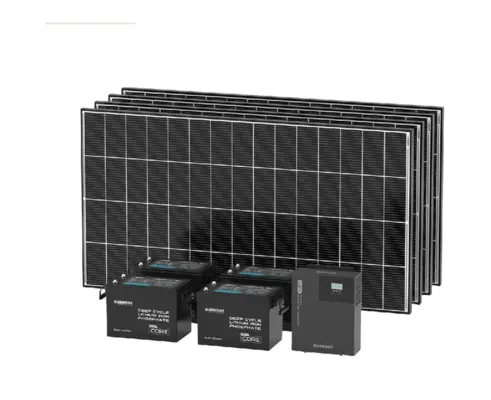
- Solar panel array (roughly 1-4 kW for a small to mid-size cabin)
- Battery bank (typically 10-20 kWh for full-time livability)
- Hybrid inverter with charge controller integration
- Backup generator (often propane or dual-fuel)
- Balance of system: wire, fuses, disconnects, panels, monitoring
Actual system costs vary based on scale, brand choices, and DIY vs professional installation. A modest DIY off-grid system for a weekend cabin might cost less than the grid-access premium in some markets. A large full-time system rivals or exceeds a substantial grid-line extension in others.
Ongoing Operating Costs
Grid-tied cabin: monthly base connection charge, plus usage. In rural areas, base fees can be substantial even when you're not there. Total annual cost is predictable and moderate.
Off-grid cabin: solar panels are essentially maintenance-free. Batteries have finite service life (typically 10-15+ years for LFP). Generator maintenance, propane refills, and eventual battery replacement all factor into ongoing costs. Over 20 years, off-grid can be cheaper than grid connection or more expensive depending on utility rates and system scaling.
What You Actually Get With Each Choice
Grid-access cabin:
- Effectively unlimited power — run any appliance without capacity concerns
- No system to maintain (utility handles it)
- Straightforward property value — broader buyer market on resale
- Reliance on utility service reliability (rural grid outages are common)
- Ongoing monthly cost even when not at the cabin
Off-grid cabin:
- Total energy independence — no monthly bill
- Load constraints — must choose appliances and use patterns to match capacity
- System ownership responsibility — you maintain and eventually replace
- Narrower buyer market on resale — not everyone wants off-grid
- Deep satisfaction of self-sufficient living for many owners
Grid-Adjacent Off-Grid (The Hybrid)
A less-discussed option: buy land with grid access but choose to install off-grid solar anyway. You get grid backup for extended cloudy periods, but you generate most of your own power. In many jurisdictions, you can also net-meter (export to the grid) or run as a grid-optional system that disconnects during outages.
This costs more upfront (both grid connection AND solar system) but offers maximum flexibility. Some cabin owners live this way for years before eventually disconnecting from the grid entirely.
Land-Use Considerations Beyond Power
Grid access often correlates with other infrastructure: better roads (utility maintains right-of-way), sometimes existing well/septic, and simpler building permits. Off-grid parcels may require more infrastructure investment beyond power — well drilling, septic engineering, road maintenance, and communication solutions all add up.
Don't compare land prices in isolation. Factor in total infrastructure cost to make each parcel actually livable at your standards.
Resale Value Considerations
Grid-connected cabins appeal to a broader buyer pool. Off-grid cabins appeal to a smaller, more committed buyer pool but often command strong prices in that niche. Both can be resale-friendly with the right marketing; both can be difficult to sell in specific market conditions.
Practical reality: if you build a well-designed off-grid cabin with modern LiFePO4 batteries, adequate solar, and reasonable backup, most rural buyers will consider it. A poorly-designed off-grid system with old batteries and undersized solar is a red flag on any market.
Time Value Considerations
Grid utility line extensions can take months to a year or more from application to completion. Off-grid solar can be installed and operational in weeks. If your timeline matters, off-grid may be faster to reach usable power.
Getting a grid connection through the initial rounds of utility engineering, easement negotiations, and installation is often more frustrating than most buyers expect. Off-grid, you're in control of the timeline.
Which Should You Choose?
Choose grid-access land if:
- Your budget accommodates the premium or the extension cost
- You want low-effort power with no load restrictions
- Resale flexibility matters
- You expect heavy loads (electric heat, EV charging, workshop tools)
Choose off-grid land if:
- You value energy independence philosophically or practically
- The land itself is compelling and the power premium is excessive
- Your load profile is modest and can be designed to match solar capacity
- You're comfortable with system ownership and maintenance
Recommended Investment Areas (Either Path)
Propane or dual-fuel generator sized to run essential cabin loads during outages or extended cloudy periods. Automatic transfer switch integration ideal.
For grid-connected cabins, essential protection against utility surges. Whole-panel surge suppressors mount at the main panel.
Complete DIY off-grid system: panels, charge controller, batteries, inverter. Sized for weekend cabin scale.
Power planning tool or spreadsheet template for calculating cabin electrical loads. Essential before any solar sizing decision.
Basic electrical testing equipment: multimeter, GFCI tester, receptacle tester. For inspecting any existing electrical infrastructure on either type of parcel.
Related reading: For a deep dive on off-grid system sizing, see our cabin solar sizing pillar. For real-world cost tier framing, see what an off-grid cabin solar system costs. And for the hybrid path, see our off-grid vs grid-tie cabin comparison.
The Bottom Line
The right choice depends on your specific parcels, your budget, and how you actually want to live at your cabin. There is no universal answer.
Before deciding: get an actual utility quote for the parcel without power. Compare that to a realistic off-grid system estimate for your intended loads. Factor in ongoing costs over your expected ownership horizon. Consider resale implications. Then make the decision that fits your specific situation.
What you should never do: assume off-grid is cheaper because you avoid the monthly bill, or assume grid-access is cheaper because you skip the solar system. Both assumptions ignore the specific numbers for your specific parcel — and the specific numbers often surprise buyers on either path.
Frequently Asked Questions
Is off-grid always cheaper than grid connection?
No. Depending on land parcel, utility extension quote, and your load profile, either path can be cheaper. Always compare specific numbers rather than assuming.
How long do off-grid batteries last?
Modern LiFePO4 batteries typically deliver 10-15+ years of service in cabin applications. Replacement cost is a real factor in total ownership cost calculations.
Can I switch from grid to off-grid later?
Yes. Grid disconnection is straightforward — contact your utility and stop paying the base fee. The reverse (off-grid to grid) is harder because you need to arrange line extension after the fact.
Does off-grid affect insurance rates?
Some insurance carriers charge more for off-grid cabins; others treat them the same as grid-connected properties. Get quotes from multiple carriers before committing.
What about internet at off-grid land?
Starlink has largely solved rural internet regardless of grid status. Cellular boosters work where marginal cell signal exists. See our Starlink vs cell booster comparison for details.