Solar Panels for Humid, Coastal & Wet Cabin Locations
Affiliate disclosure: This page contains paid links to Amazon and eBay. If you buy through them, we may earn a commission at no extra cost to you. As an Amazon Associate I earn from qualifying purchases.
Off-grid cabin solar is straightforward in Arizona. It's a materially different problem in coastal Maine, the Olympic Peninsula, the Gulf Coast, and the Great Lakes shore. Salt air, chronic humidity, and constant moisture attack every metal and every seal in a solar array. This guide covers the panel specs, mounting materials, and wiring practices that actually survive humid and coastal environments.
What Humidity and Salt Air Actually Do to Solar
Solar hardware is engineered to survive weather — but "weather" in a lab test isn't the same as 15 years of coastal fog, salt spray driven by winter storms, and 90% relative humidity every summer night. Four failure modes dominate in humid and coastal environments:
1. Frame and mount corrosion
Solar panels have aluminum frames, but the mounting hardware bolted to them is often plain steel or lower-grade stainless. In salt-air environments, galvanic corrosion between dissimilar metals causes fastener heads to disintegrate within 5 years, brackets to develop rust bloom, and eventually mounts to fail structurally.
2. Junction box seal degradation
Every solar panel has a rear junction box (J-box) where the bypass diodes and MC4 leads exit. Humidity slowly degrades the potting compound and gaskets. Water intrusion into a J-box causes diode failures and creates a corrosion path back through the cell strings.
3. MC4 connector corrosion
MC4 connectors are IP67-rated when properly assembled, but they were designed for dry Alpine installations. In coastal humidity, the metal contact pins corrode over time, especially if the connectors sit in standing water on a low-slope roof or under a shrub for a ground-mount rack.
4. Cell delamination and PID (potential-induced degradation)
The EVA (ethylene-vinyl acetate) layer that laminates the solar cells to the front glass can slowly delaminate in high-humidity environments, letting moisture reach the cells. PID is a related failure where high humidity + high system voltage causes power loss through the front glass to the frame. Modern PID-resistant panels largely solve this; older or budget panels don't.
IP Ratings, Salt Mist Testing, and What to Look For
Panel specs list several ratings that matter for humid and coastal use. Read them, don't skim them.
IP rating (Ingress Protection)
An IP rating like IP67 or IP68 tells you what the enclosure keeps out. First digit is dust, second is water:
- IP65: dust-tight, protected against water jets. Minimum acceptable for outdoor solar hardware.
- IP67: dust-tight, protected against temporary immersion. Standard for panel J-boxes and MC4 connectors.
- IP68: dust-tight, protected against continuous immersion. Preferable for coastal or high-splash environments.
Look for IP68 J-boxes on any panels going into a coastal install. It's a modest premium over IP67 and meaningfully improves long-term reliability.
Salt mist certification (IEC 61701)
The IEC 61701 test cycles panels through salt-fog exposure over multiple weeks. Panels that pass Severity 6 are certified for coastal use. This is a real, meaningful certification — not just marketing.
Check the panel datasheet for "IEC 61701 Salt Mist Corrosion Test" certification. Reputable brands (Trina, Canadian Solar, LG, REC, some Renogy commercial series) publish this; budget generic panels frequently don't test to it.
Ammonia resistance (IEC 62716)
Less relevant for cabins unless you're near intensive agriculture. Skip.
PID resistance
Look for "PID-free" or "PID-resistant" panels. Most premium mono panels in the last 5 years are PID-resistant. Cheap third-party panels often aren't.
Which Panel Technology Handles Humidity Best
For a humid or coastal cabin install, panel technology choice matters.
Monocrystalline with N-type or PERC cells
Standard choice. Look for the following features on the datasheet:
- IEC 61701 salt-mist Severity 6 certification
- IP68 rated junction box
- Anodized aluminum frame (not plain aluminum)
- N-type or PERC cell technology (better degradation profile than older P-type)
- 25-year power warranty from a manufacturer that will still exist in year 20
Glass-glass (dual-glass, bifacial) panels
Instead of a plastic backsheet, both sides of the panel are tempered glass. Advantages for humid environments: no backsheet to degrade, no potential moisture entry through the backsheet, better long-term stability. Downsides: heavier (~10–15% more weight), more expensive, requires bifacial-capable racking.
Glass-glass is the premium choice for coastal cabins that will see decades of salt exposure. The extra cost is justified by materially longer service life.
Marine-specific panels
Some manufacturers sell "marine grade" panels designed for boat use. These are typically heavier-frame, more thoroughly sealed, sometimes semi-flexible. Reasonable for a cabin that lives essentially in a marine environment (an overwater cabin, a boat house, a shore-side deck-mount). Expensive per watt.
Skip flexible panels for permanent coastal installs
Flexible panels have a shorter service life (typically 5–10 years) that gets even shorter in coastal environments. Reasonable for a portable panel you can take inside during storm season; not a smart permanent install.
Mounting Hardware for Salt and Humidity
The panel might survive 25 years. The mounts holding it up frequently don't — and mount failure is what actually takes down a coastal solar array.
Materials that hold up
- 316 stainless steel: the standard for marine environments. 316 has added molybdenum vs. 304, giving materially better chloride corrosion resistance. Every fastener, every clamp, every bolt on a coastal install should be 316. Not 304, not "stainless" without a grade specified, not plated steel.
- Anodized aluminum: rail systems and L-feet should be anodized aluminum (Type II or III). Plain aluminum will pit and streak in salt air but structurally holds up. Anodized aluminum lasts noticeably longer.
- Rubber-coated hardware or EPDM washers: any bolted joint should have an EPDM or silicone washer isolating dissimilar metals.
Materials to avoid
- Plain steel (rusts in months)
- Zinc-plated steel (rusts in a year or two, faster near salt)
- Galvanized steel (better than plated steel but still fails in salt spray environments over 5–10 years)
- Mixed metals in direct contact without isolation (galvanic corrosion)
Wiring, Conduit, and Enclosure Practices
Wiring is where coastal humidity does its slowest and most consequential damage. A few practices that matter:
MC4 connector protection
- Every MC4 connection must be assembled with the correct crimp tool and IP67 seal. Field-assembled connectors done with pliers and hope are common and fail.
- Route MC4s so they never sit in standing water, mud, or bird droppings.
- On ground-mount racks near the ground, run the MC4 leads up to a junction box mounted on the rack rail, not down where they can lay in wet grass.
- Some installers use a light coat of dielectric grease on the pins before assembly. Not required but helpful in wet environments.
Conduit choice
PVC electrical conduit works but degrades from UV exposure over time. In coastal environments where you also want mechanical protection, EMT (electrical metallic tubing) is stronger but rusts if not galvanized properly — use galvanized EMT with proper couplings and elbows. Aluminum rigid conduit is expensive but essentially immune to salt corrosion.
Enclosures (combiner box, disconnect, inverter)
- Combiner boxes and DC disconnects on the rack or roof should be NEMA 4X rated (dust-tight, hose-directed water, corrosion-resistant). NEMA 3R is common on inland installs and inadequate for coastal.
- Inverters mounted outdoors need NEMA 4X ratings. Interior mounting is far better in coastal environments — inside a garage, mud room, or mechanical closet.
- All enclosure penetrations (conduit, cable glands) must be properly sealed. Not with a smear of caulk. With actual rated fittings.
Grounding matters more in salt air
Salt air creates a conductive fog that will find any weakness in your equipment grounding. Every rack rail, every mount, every enclosure should be bonded to a proper equipment grounding conductor per NEC 250. Grounding failures in salt environments cause hard-to-diagnose ground-fault trips and long-term corrosion around the fault.
Regional Notes: Pacific Northwest, Gulf Coast, Great Lakes
Pacific Northwest (Coastal Washington, Oregon, BC)
Chronic humidity, moderate but not extreme salt exposure (except right on the beach), long overcast winters. The overcast is the bigger design challenge than the humidity. December peak-sun-hours can be 1.2–1.8, half or less of what your annual average suggests. Oversize both panels and battery bank. Expect moss growth on panels over time — a light annual cleaning matters.
Gulf Coast (Louisiana, Mississippi, Alabama, Florida Panhandle)
Heavy heat, oppressive humidity, active hurricane risk, salt exposure varies by distance from shore. Two design implications:
- Hurricane-rated mounting: use racking systems specifically rated for high-wind zones. Ballasted ground-mount is not sufficient in hurricane country — use anchor-set ground-mount with piers or ground screws rated for design wind speeds. Roof-mount arrays must be securely mounted to structure with proper flashing.
- Heat derating: solar panel output drops about 0.4%/°C above 25°C cell temperature. Gulf Coast summer cell temperatures can hit 60–70°C, cutting output 15–20%. Oversize panels accordingly.
Great Lakes (shore-side cabins on Superior, Michigan, Huron, Erie)
Fresh-water salt exposure is negligible, but chronic humidity and lake-effect precipitation matter. Winter is the design challenge: heavy snow, ice storms, and short winter days. Ground-mount at a steep tilt (60°+) so snow slides off; or accept that roof-mount panels will be snow-covered intermittently. Battery bank should be sized for 3+ days of autonomy in December.
Coastal Northeast (Maine, coastal New England)
Cold + salt + humidity is a triple threat. All the coastal considerations apply plus battery cold-weather handling. Marine-grade panels + 316 stainless mounts + heated LiFePO4 batteries + oversized winter capacity. This is the environment where every corner-cutting decision costs you later.
Alaska coastal and southeast Alaska
Marine environment + very short winter days + extreme cold. Solar is a supplemental power source for most Alaska cabins, not primary. Wind and hydro often make more sense as primary sources with solar supplementing.
Maintenance Schedule for Coastal Cabin Solar
Inland solar arrays are effectively zero-maintenance. Coastal arrays aren't. A reasonable schedule:
- Monthly (during use season): Visual check of the array from the ground. Any obvious dirt, bird droppings, or panel damage?
- Every 6 months: Rinse panels with fresh water (rain rinse is often adequate in wet climates, but salt deposits benefit from an occasional deliberate rinse). Check MC4 connectors visible on the ground-mount rack for corrosion.
- Annually: Physical inspection of all mount hardware. Look for rust bloom, loose fasteners, cracked bushings. Torque-check critical bolts. Inspect ground bonding straps for corrosion.
- Every 3–5 years: Full inspection of J-boxes and combiner box for signs of moisture intrusion. Some installers infrared-scan the array for hot spots that suggest failing bypass diodes.
- Every 5–10 years: Replace MC4 connectors on any panels showing corrosion signs. Consider replacing older-generation fuse holders and DC disconnects if they show wear.
The maintenance schedule sounds like a lot but each visit is 20–60 minutes. Skipping it doesn't save you money — it costs you a failed component in year 8 instead of finding it in year 6.
For the underlying system design, see our off-grid cabin solar buyer's guide.
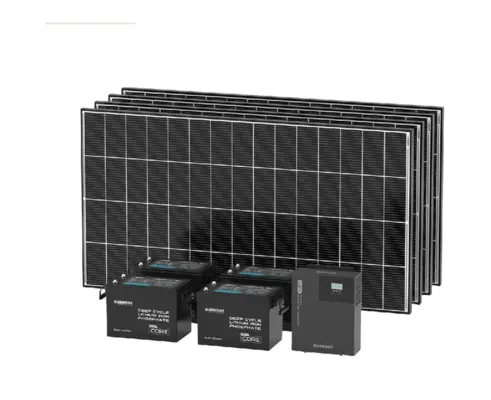 Renogy Cabin Solution — Complete Off-Grid Solar Kit →
Frequently Asked Questions
Do solar panels work in humid climates?
Yes, humidity doesn't reduce daily solar output meaningfully. What humid climates change is long-term reliability: panel junction boxes, MC4 connectors, and mount hardware all age faster in high-humidity environments. Design for the humidity by choosing IP68 J-boxes, IEC 61701 salt-mist-certified panels, 316 stainless mount hardware, and a maintenance schedule.
What panel specs matter for coastal solar installs?
Look for IEC 61701 salt-mist corrosion testing at Severity 6, IP68 junction box rating, N-type or PERC monocrystalline cells, anodized aluminum frame, PID-resistant construction, and a 25-year manufacturer warranty from a company likely to still exist. Glass-glass (bifacial) panels are the premium choice because there's no backsheet to degrade.
What kind of mounting hardware do I need for a coastal cabin?
Everything metal should be 316 stainless steel or anodized aluminum. Not 304 stainless, not zinc-plated steel, not galvanized (galvanized is OK inland but fails in salt spray over 5–10 years). Use EPDM or silicone washers to isolate dissimilar metals at bolted joints. Enclosures should be NEMA 4X.
Are flexible solar panels good for coastal cabins?
Not for permanent installs. Flexible panels have a 5–10 year service life vs. 25 years for rigid mono, and coastal environments shorten that further. Reasonable for portable panels you can move inside during storm season; not a smart permanent cabin install.
Do I need special MC4 connectors for humid environments?
Standard MC4 connectors are IP67 rated and adequate for coastal use if assembled correctly with the right crimp tool. What matters more is routing — keep MC4s out of standing water, mud, and bird droppings. Route them up off the ground on ground-mount racks. A light dielectric grease on the pins before assembly is a modest extra precaution.
How often should I clean solar panels on a coastal cabin?
Rinse with fresh water every 6 months to clear salt deposits. In wet climates, rain rinse is often adequate but deliberate fresh-water rinse before winter is a good habit. Physical cleaning is only needed if visible dirt, bird droppings, or moss/lichen appear. Do not use pressure washing — it can damage the anti-reflective coating.
Will solar panels survive a hurricane?
Depends on the mounting. Properly engineered ground-mount racks with anchor-set piers or ground screws, and roof-mount arrays with hurricane-rated flashings and attachment, are designed to survive design wind speeds for their region. Ballasted (weighted) mounts that are common in commercial rooftop solar are not sufficient for hurricane country. Panels themselves are typically rated to survive 1" hail at 50 mph and design wind loads up to 140+ mph.
What's the best solar panel technology for humid environments?
Glass-glass (dual-glass) monocrystalline panels are the premium choice — no backsheet to degrade, better long-term moisture resistance, and typically longer warranties. Standard mono panels with IP68 J-boxes and IEC 61701 salt-mist certification are the mainstream choice at a lower price. Skip cheap generic panels — they typically don't test to the certifications that matter in humid climates.